On October 6, 2025, China celebrates the Mid-Autumn Festival (中秋节, Zhōngqiū Jié). Another common name for it is the Mooncake Festival. Among national holidays, it rivals National Day (the founding of the republic), May Day (International Workers’ Day), and Chinese New Year in significance.
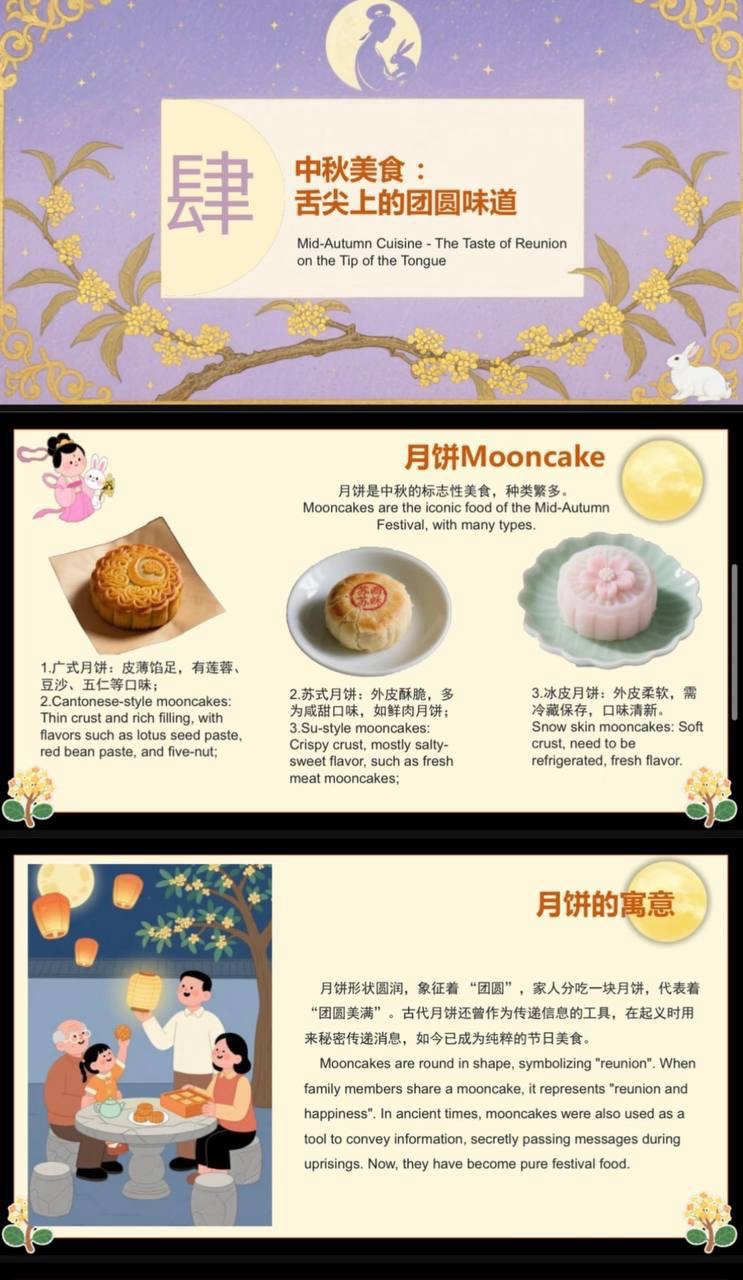
The festival originated during the Bronze Age under the Shang Dynasty and only grew in popularity from there. By the Han Dynasty, the main components of the celebration were already established: moon gazing, paying respect to the elderly, and distributing cakes – the prototype of mooncakes (月饼).
During the Tang and Song Dynasties, it received official recognition, and mooncakes became even more similar to their modern form. Subsequently, the tradition of celebrating the Mid-Autumn Festival continued to strengthen, despite frequent dynastic changes in China. The tradition was even adopted by the Manchu rulers of the Qing Dynasty.
The Mid-Autumn Festival is also a kind of Chinese equivalent of Valentine’s Day – an opportunity to have a picnic in the park, admire the full moon, and treat each other to the essential mooncakes.
This aspect of the holiday is connected to the legend of the Moon Elder (月老, Yuè Lǎo), who bound lovers together with an invisible, magical red silk thread. He is considered responsible for love and marriage. For this reason, this day is considered auspicious for prayers to find love and a happy marriage.
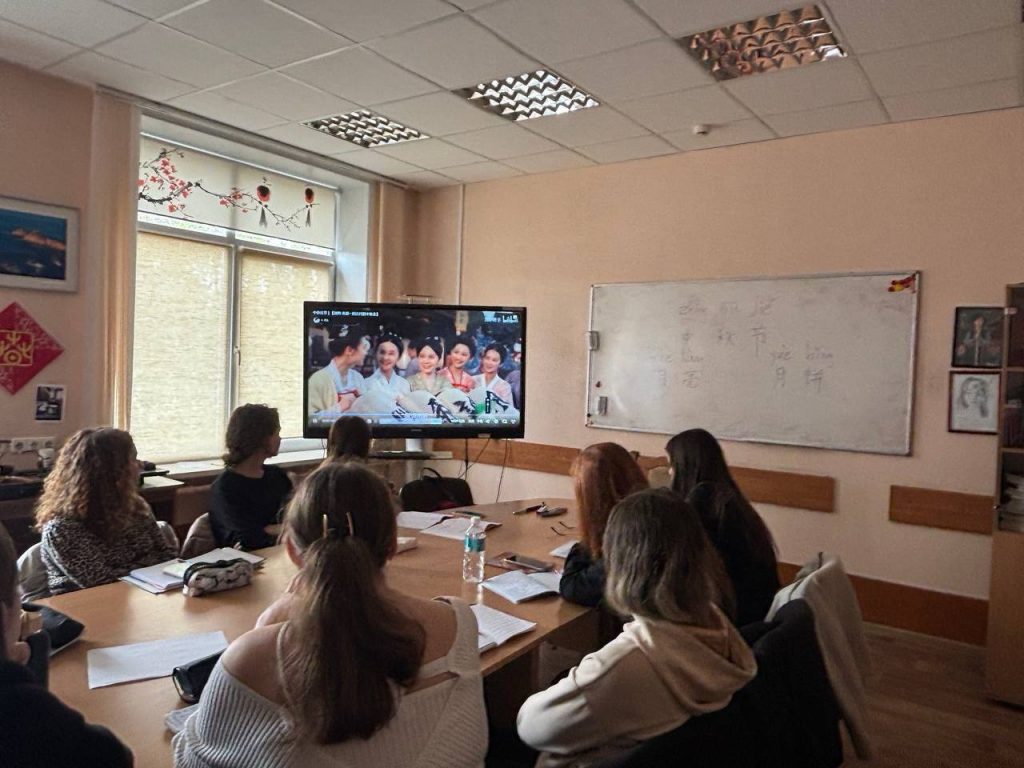
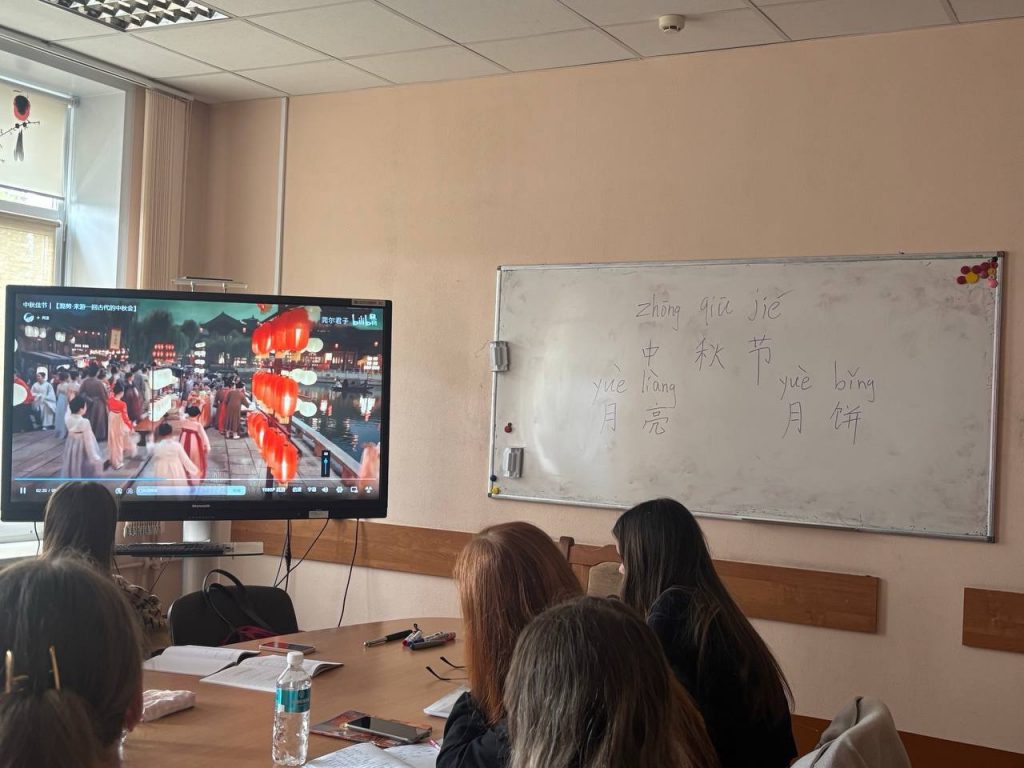
The event was prepared and conducted with the participation of Chinese language teachers from the Department of English and Oriental Languages: V.Yu. Nazarenko, T.A. Fomenok, O.N. Kudashova, K.A. Linevich, Liu Hui, Meng Jialiang, Zhang Haijong, and second and third-year students of the Faculty of International Business Communications.
Happy Mid-Autumn Festival